Business to business marketing—also called company to company marketing—helps one organization become easier for another organization to find, evaluate, and contact. For contractors, industrial firms, trucking companies, and other Uinta Basin businesses, that process often starts with a website, Google visibility, reviews, and clear proof of capability.
This guide explains eight practical B2B marketing strategies and how to apply them without wasting time on broad, generic promotion. The right mix depends on who you sell to, how buyers research you, and whether your immediate priority is leads, recruiting, reputation, or long-term visibility.
This guide explains eight practical B2B marketing strategies and how to apply them without wasting time on broad, generic promotion. The right mix depends on who you sell to, how buyers research you, and whether your immediate priority is leads, recruiting, reputation, or long-term visibility.
That's an example of business to business marketing for the Uinta Basin. It isn't flashy branding for venture-backed software. It's a welding shop proving capability, a trucking company recruiting drivers, an excavation contractor showing service areas, or an oilfield service firm building enough credibility online to make the shortlist.
B2B isn't a small side market. The global B2B eCommerce market was valued at $36.16 trillion in 2026 and is projected to reach $41.40 trillion by 2027, a projected 14.5% CAGR, according to SellersCommerce B2B marketing statistics. The same dataset notes that customer referrals account for 54% of all B2B leads, which fits what rural Utah businesses already know. Reputation still drives sales.
Table of Contents
- 1. Account-Based Marketing (ABM)
- 2. Content Marketing and Thought Leadership
- 3. Search Engine Optimization (SEO) and Local SEO
- 4. LinkedIn Sales Development and Professional Networking
- 5. Email Marketing and Lead Nurturing
- 6. Lead Generation and Conversion Rate Optimization (CRO)
- 7. Paid Search Advertising (Google Ads, PPC) and Local Services Ads
- 8. Video Marketing and YouTube for B2B
- 8-Point Comparison of B2B Marketing Strategies
- Your Next Move Turning Examples into Action
1. Account-Based Marketing (ABM)

The simplest example of business to business marketing is targeting the companies you want, instead of hoping the right people stumble across you. That's ABM. For a crane company, hydrovac contractor, or web partner serving industrial firms, that means building outreach around named accounts in Uintah and Duchesne counties instead of broad “Utah businesses” messaging.
A lot of small firms think ABM is only for large sales teams. It isn't. In the Basin, a short target list often works better because a few accounts can change the year.
Build around target accounts, not broad audiences
Start with a list of companies that fit your best work. Maybe it's oilfield operators expanding crews, trucking companies struggling with recruiting, or civil contractors bidding larger jobs. Then build one page, one message, and one offer around each type.
For example, if you're marketing to an oilfield service company, don't send them to your homepage. Send them to a page that speaks directly to field recruiting, equipment capability, safety credibility, and fast contact paths. If you're trying to win excavation accounts, show earthwork photos, service area pages, and proof that you understand bid-driven timelines.
Practical rule: If your outreach could be sent to twenty different companies with no edits, it's too generic for ABM.
A Uinta Basin ABM example
A practical version looks like this:
- Pick high-value account groups: Focus on operators, subcontractors, rental companies, and industrial service firms already active in your service area.
- Create account-specific landing pages: Build one page for trucking recruitment, one for excavation leads, one for oilfield hiring support.
- Align sales and marketing: Decide who follows up, what gets sent first, and what counts as a qualified response.
- Use LinkedIn for research: Check who owns, manages, or influences the buying decision before you reach out.
What doesn't work is pretending personalization means dropping a company name into a cold email. Real ABM means the page, the proof, and the offer all match the account.
2. Content Marketing and Thought Leadership
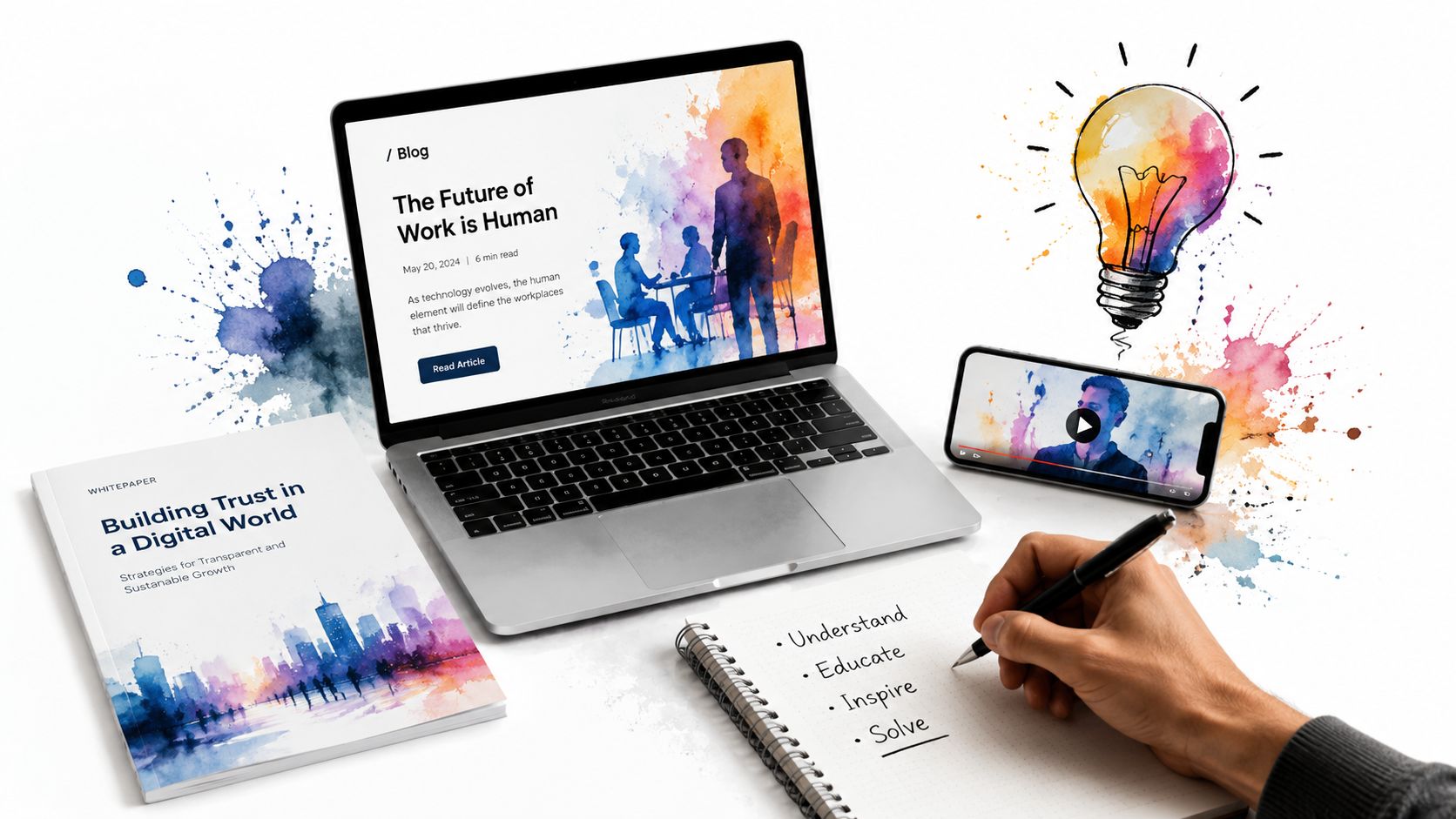
Content marketing gets oversold and under-executed. Many contractors hear “start a blog” and picture generic posts nobody reads. That's not thought leadership. Good B2B content answers the exact questions buyers, estimators, project managers, and job seekers already have.
This shift matters because buyers are doing more homework before they ever talk to you. According to Corporate Visions B2B buying behavior statistics, 81% of buyers initiate first contact with sellers, 61% prefer an overall rep-free buying experience, and 73% avoid suppliers that send irrelevant outreach. If you're invisible during the research stage, you're late.
Teach what your buyers already ask
For Basin businesses, strong content usually falls into a few buckets. Service explainers. Recruiting pages. Case studies. Safety and process videos. Location pages. Capability pages.
An excavation company might publish pages on trenching, site prep, utility work, and emergency response. A trucking company might create hiring content around routes, equipment, home-time expectations, and what a new driver can expect during onboarding. A welding shop might post project galleries with short writeups explaining material type, use case, and turnaround.
One detail many companies miss is image optimization. Even your project photos should support search visibility. Northpoint Web's guide on naming pictures for SEO is a good example of the kind of small technical fix that adds up over time.
A simple content template for rural contractors
Use this structure for nearly any service article:
- Problem: Name the issue the buyer is trying to solve.
- Process: Explain how your crew handles the work.
- Proof: Add photos, certifications, service areas, or a short result summary.
- Action: Give one next step, such as call, request quote, or apply now.
If you want a broader framework for publishing, this B2B content planning checklist is useful.
What doesn't work is posting trend pieces that have nothing to do with your actual sales process. If your buyers need confidence, publish proof.
3. Search Engine Optimization (SEO) and Local SEO
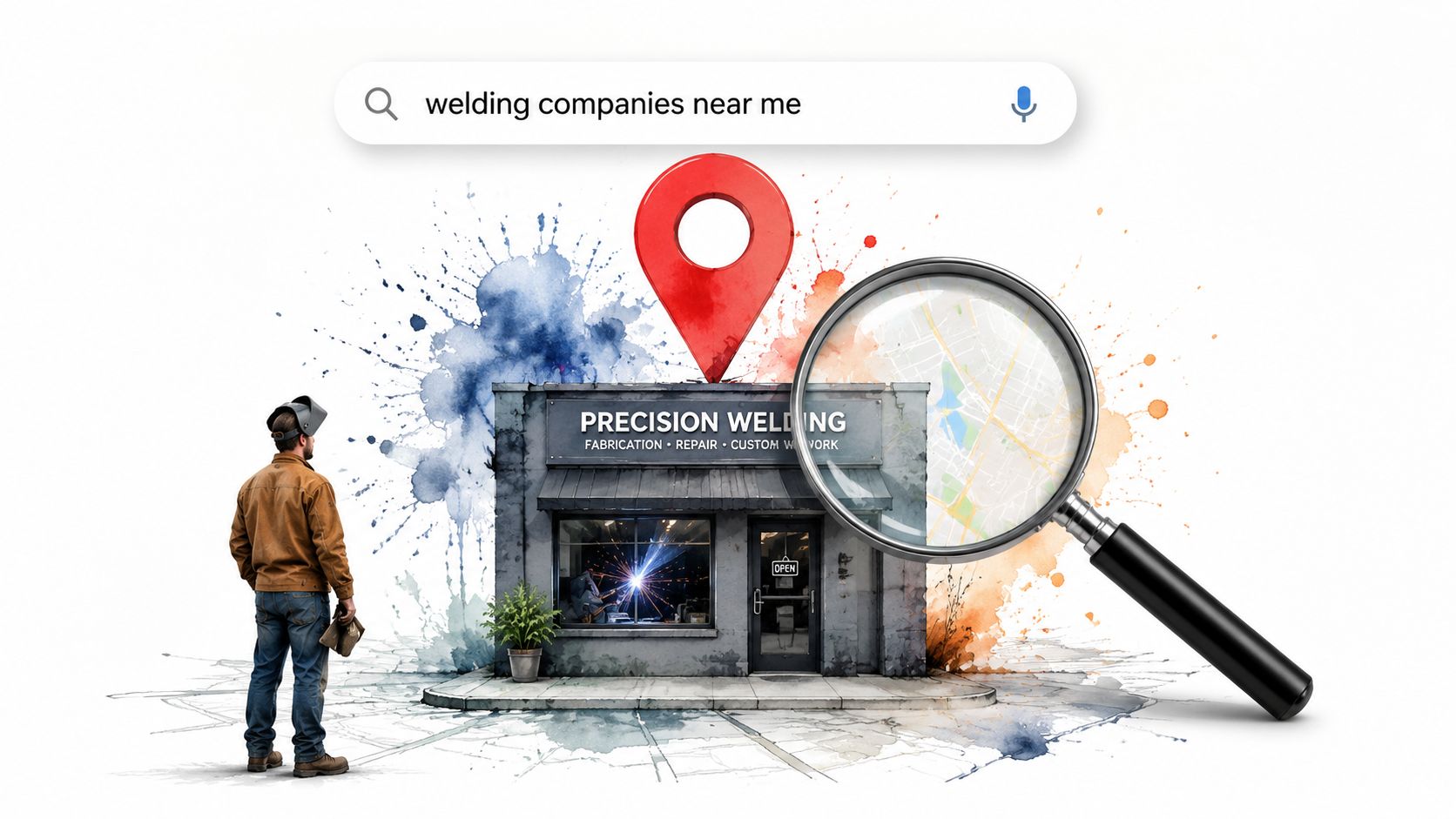
For most industrial and construction companies in the Uinta Basin, SEO isn't about chasing vanity rankings. It's about showing up when someone searches “welding contractor Vernal,” “excavation company Duchesne,” or “CDL jobs Roosevelt Utah.” Local SEO is often the clearest example of business to business marketing because it connects a business need to a local provider at the moment of intent.
A well-built Google Business Profile, solid service pages, and clear location targeting often outperform a fancy site with weak structure.
Local visibility wins practical searches
Buyers in long-cycle industries don't always convert on the first visit. They compare. They return. They verify. That's why your local presence has to do more than exist. It has to reduce doubt.
A contractor searching for a subcontractor wants to know where you work, what you do, and whether you look established. A job seeker wants to know if you're active, legitimate, and hiring. Local SEO supports both.
The guide on local SEO for contractors covers the fundamentals contractors need to clean up first.
What to fix first
If your local visibility is weak, start here:
- Claim your Google Business Profile: Fill out services, business categories, hours, and contact details.
- Match your NAP everywhere: Your name, address, and phone need to match across listings.
- Build service and location pages: Don't lump everything into one generic services page.
- Collect reviews consistently: Reviews support trust, especially for firms buyers haven't worked with before.
Buyers don't need your website to be clever. They need it to be clear, current, and easy to verify.
What doesn't work is stuffing city names into thin pages. Search visibility improves when each page helps the visitor.
4. LinkedIn Sales Development and Professional Networking
LinkedIn is one of the few places where B2B networking, recruiting, credibility, and direct outreach all live in the same channel. For oilfield service owners, trucking operators, and industrial suppliers, that's useful because the same platform can help you stay visible to decision-makers and future hires.
Still, LinkedIn gets misused all the time. Owners either ignore it completely or treat it like a billboard for company slogans.
LinkedIn works when you use it like a jobsite introduction
The best approach is straightforward. Optimize your company page. Make sure leadership profiles are complete. Post enough to show the company is active and competent. Then use direct outreach carefully.
A welding or fabrication shop can connect with plant managers, contractors, and procurement contacts. A trucking company can use LinkedIn to support recruiting by posting fleet updates, hiring messages, and team spotlights. A construction manager can stay in front of suppliers and subcontractors without making every interaction a pitch.
The trade-off is time. LinkedIn works best with consistency, but most rural companies don't have a full-time marketing person. That means leadership should focus on a small number of useful posts instead of trying to mimic national brands.
What to post if you hate posting
Start with practical content:
- Project updates: Share what your team completed and where.
- Hiring posts: Show the work environment, equipment, and expectations.
- Operational insight: Talk about process, safety, scheduling, or coordination.
- Customer proof: Share a short success story without overcomplicating it.
For a broader tactical approach, RepurposeMyWebinar's LinkedIn playbook offers ideas worth adapting.
What doesn't work is generic connection requests followed by immediate sales messages. That burns trust fast, especially in small regional markets where people know each other.
5. Email Marketing and Lead Nurturing
Email still matters because most B2B deals don't close on first contact. A contractor might ask for pricing, go quiet for weeks, then return when a project is approved. A trucking prospect may visit your jobs page now and apply later. Email gives you a way to stay present without chasing people.
That's where many businesses get it wrong. They either never follow up, or they send repetitive “just checking in” messages that add no value.
Stay in front of buyers without being annoying
Useful B2B email is segmented and relevant. Prospects should get different emails than past customers. Applicants should get different emails than project leads. If you're sending the same blast to everyone, you're wasting the channel.
This matters even more now because digital buyers are screening vendors on relevance. Strong nurture emails can support the self-education buyers already prefer, especially when your sales cycle involves approvals, scheduling, and multiple stakeholders.
A practical nurture sequence
A simple sequence for a Basin contractor or industrial company might look like this:
- Email one: Thank them for reaching out and explain the next step.
- Email two: Share a related service page, project example, or capabilities sheet.
- Email three: Address a common concern such as scheduling, safety, or mobilization.
- Email four: Invite a call, site visit, or quote request.
For recruiting, the same principle applies. Send applicants a clear follow-up, company overview, and job expectations instead of leaving them in the dark.
Send emails people can use. If every message asks for something but gives nothing, replies will dry up.
If you need a broad overview of setup, list building, and campaign basics, this complete email marketing guide is a solid reference.
6. Lead Generation and Conversion Rate Optimization (CRO)
Lead generation is where strategy meets reality. If your website gets traffic but doesn't produce calls, quote requests, or applications, the problem usually isn't “more marketing.” It's friction. CRO fixes that friction.
This is one of the most useful examples of business to business marketing because the gains come from making your current traffic more likely to act. You don't always need more visitors first. You may need a better path for the right ones.
Your website has one job
Most contractor websites try to say everything at once. They cram all services onto one page, bury contact info, use weak headlines, and ask visitors to hunt for the next step. That hurts conversions.
A stronger page says who you help, what you do, where you work, and how to contact you. Fast. Then it backs up the claim with proof.
Northpoint Web's page on lead generation for contractors lines up with that practical approach.
A better page structure for contractors
A service page for an excavation or oilfield company should usually include:
- Clear headline: State the service and service area immediately.
- Short capability summary: Explain the work in plain language.
- Proof section: Add project photos, certifications, equipment, or testimonials.
- Strong contact path: Use a short form, visible phone number, and simple CTA.
Case studies matter here too, but only if they show business impact. Visable notes that a strong B2B case study should document measurable before-and-after outcomes because decision-makers use quantified results to judge whether the solution could apply to their own business, as explained in Visable's guide to case studies in B2B.
What doesn't work is sending paid traffic or SEO traffic to a homepage with no focused offer.
7. Paid Search Advertising (Google Ads, PPC) and Local Services Ads
Paid search is useful when you need visibility now. SEO takes time. Referrals fluctuate. Bids open and close. Hiring needs can hit all at once. Google Ads can put a contractor, trucking company, or industrial service business in front of searchers already looking for help.
That said, paid search gets expensive fast when the setup is sloppy. Broad keywords, weak landing pages, and no negative keyword list will burn budget.
Use paid search for intent, not awareness
The best paid campaigns target commercial intent. Someone searching for “roustabout services Vernal” or “excavation contractor near Duchesne” is much closer to action than someone searching broad industry terms.
For local service businesses that qualify, Local Services Ads can also be worth testing because they sit high in results and lean heavily on trust signals. For other firms, standard search campaigns often make more sense, especially when paired with focused landing pages built around one service and one location.
Where paid campaigns usually go wrong
Common mistakes are predictable:
- Sending traffic to the homepage: The ad promise and landing page need to match.
- Ignoring search terms: Bad traffic hides inside broad campaigns.
- Running one ad group for everything: Separate services and locations.
- Not tracking calls and forms: If you can't tie leads back to campaigns, you can't improve them.
One real B2B e-commerce example shows what can happen when digital infrastructure supports growth. Adobe reports that after moving to Adobe Commerce, FoodServiceDirect.com achieved a 40% increase in new customer acquisition, a 110% increase in repeat purchases, and 40% growth in B2B sales, while managing a 250,000-SKU catalog through a headless-commerce architecture in Adobe's B2B e-commerce case studies. Most Basin companies don't need that level of complexity, but the lesson holds. Better digital systems make paid traffic more valuable.
8. Video Marketing and YouTube for B2B
A drilling superintendent in the Uinta Basin is comparing vendors after hours. He is not looking for a clever brand film. He wants to see your crew, your iron, your shop standards, and whether your team looks ready to show up safely and do the work.
That is why video works so well in industrial B2B. It gives buyers proof before the first call. For oilfield service companies, trucking firms, and construction contractors around Vernal, Roosevelt, Duchesne, and surrounding job corridors, that proof matters more than polished messaging.
Show the work buyers actually care about
The best B2B videos for Basin companies are simple and specific. A welding shop can record a fabrication sequence with a short explanation of tolerances, materials, and turnaround times. An excavation contractor can show site prep, trenching, and finished grade. A trucking company can film a driver recruiting video that covers truck specs, haul types, home time, and what a new hire should expect in the first two weeks. An oilfield service company can walk through field readiness, safety process, dispatch speed, and mobilization capacity.
Production quality matters less than usefulness. A clear phone video with decent audio, steady shots, and a supervisor who speaks plainly will usually do more for trust than a glossy promo full of drone footage and generic claims.
Here's a practical example to study:
Video formats that fit Basin businesses
Use formats that help sales conversations, bid support, and recruiting:
- Jobsite walkthroughs: Show equipment, crew coordination, staging, and finished results.
- Capability videos: Explain one service, one process, or one piece of specialized equipment.
- Recruiting videos: Cover schedule, expectations, safety culture, equipment quality, and who is a good fit.
- FAQ clips: Answer the questions buyers ask before they request a quote or issue a bid invite.
Keep each video focused on one topic. A three-minute video on hydro excavation in winter conditions is more useful than a vague company overview that tries to cover everything at once.
A practical way to implement this
Start with five videos, not twenty. Pick the services that drive the highest-value jobs or the hardest-to-fill roles. Write a rough outline with three parts: what the service is, how your team handles it, and what the customer or applicant should do next. Record on-site when possible. Real conditions beat a conference room every time.
Then publish with plain titles buyers would search for, such as "Vac truck services in the Uinta Basin," "How our pipeline excavation crew handles remote sites," or "CDL driver jobs in Vernal, Utah." Add a short description, list the service area, and mention the equipment or job types shown in the video.
A lot of brand videos fail for one reason. They stay abstract. Industrial buyers want evidence that your company can perform the work safely, professionally, and on schedule. Video gives them that evidence fast.
8-Point Comparison of B2B Marketing Strategies
| Strategy | Implementation Complexity 🔄 | Resource Requirements ⚡ | Expected Outcomes 📊 | Ideal Use Cases 💡 | Key Advantages ⭐ |
|---|---|---|---|---|---|
| Account-Based Marketing (ABM) | High, multi-stakeholder research & alignment 🔄🔄 | High, CRM, automation, dedicated account teams ⚡⚡ | Targeted high-value conversions; stronger ROI per account 📊⭐ | B2B industrial clients targeting specific companies or hires | Highly personalized outreach; faster close for qualified accounts ⭐ |
| Content Marketing & Thought Leadership | Medium, ongoing editorial process 🔄 | Medium, writers, SEO, multimedia production ⚡ | Increased organic traffic, authority, long-term lead flow 📊 | Firms building regional authority or recruiting skilled labor | Evergreen assets; credibility and sustained inbound leads ⭐ |
| SEO & Local SEO | Medium–High, technical + content upkeep 🔄🔄 | Medium, technical expertise, tools, local listings ⚡ | Sustained organic visibility and high-intent local leads 📊 | All local service businesses competing for regional work | Cost-effective, long-lasting visibility in "near me" searches ⭐ |
| LinkedIn Sales Development & Networking | Medium, profile strategy and outreach routine 🔄 | Low–Medium, time, Sales Navigator, content ⚡ | Direct access to decision‑makers; relationship-based leads 📊 | Recruitment, B2B networking, supplier/customer outreach | Precise prospecting and credibility building via professional network ⭐ |
| Email Marketing & Lead Nurturing | Low–Medium, setup of segments and automations 🔄 | Low–Medium, email platform, content creation ⚡ | High ROI; consistent lead nurture across long sales cycles 📊 | Lead nurturing, recruitment campaigns, customer retention | Owned channel with measurable engagement and conversions ⭐ |
| Lead Generation & CRO | Medium, iterative testing and analytics 🔄 | Medium, analytics tools, design, testing platforms ⚡ | Higher conversion rates from existing traffic; clearer lead quality 📊 | Websites needing better ROI (quotes, applications, bookings) | Data-driven improvements; cost-efficient uplift in leads ⭐ |
| Paid Search (PPC) & Local Services Ads | Medium, campaign setup and optimization 🔄 | High, ad spend and management expertise ⚡⚡ | Immediate visibility and measurable leads; scalable results 📊 | Time-sensitive or seasonal services; urgent recruitment | Fast, targeted traffic; top-of-search placement (LSA) ⭐ |
| Video Marketing & YouTube for B2B | Medium–High, planning, filming, editing 🔄🔄 | Medium–High, equipment or production support ⚡ | Higher engagement, improved conversions and recruitment impact 📊 | Demonstrations, safety training, recruitment, complex services | Humanizes brand; strong engagement and SEO benefits ⭐ |
Your Next Move Turning Examples into Action
These eight examples of business to business marketing work because they match how real buyers behave in industrial, construction, trucking, and oilfield markets. People still buy from companies they trust. That hasn't changed. What has changed is where that trust starts. It starts on Google, on your website, on your company profile, in your videos, in your reviews, and in the clarity of your message.
For Uinta Basin businesses, the biggest mistake isn't doing too little marketing. It's doing disconnected marketing. A contractor runs ads to a weak homepage. A trucking company posts jobs on social but has no recruiting page worth visiting. An oilfield service firm has solid field capability but no useful proof online. A welding shop relies on referrals but gives referred prospects nothing strong to validate the recommendation. That gap costs work.
There's also a practical local reality here. Many Basin companies don't have in-house marketing teams. The owner handles sales. The office manager updates Facebook when there's time. Hiring needs are urgent. Project opportunities come in waves. That means your marketing has to be simple enough to run, but strong enough to support long sales cycles and reputation-based buying.
The better move is to choose the one strategy tied to your biggest current constraint.
If leads are the issue, fix SEO, local visibility, service pages, and conversions first. If recruiting is the issue, build a proper careers section, create job-specific landing pages, and support them with video and paid search. If credibility is the issue, publish project proof, case studies, reviews, and capability content that helps buyers feel safe choosing you.
A practical rollout for most companies looks like this:
- Month one: Fix the website structure, contact paths, and core service pages.
- Month two: Clean up Google Business Profile, location pages, and local SEO signals.
- Month three: Add case studies, recruiting pages, and a basic content plan.
- Month four and after: Layer in email, paid search, LinkedIn outreach, and video.
That sequence works because it builds on itself. Each channel performs better when the website and messaging are already doing their job.
Northpoint Web works with the kinds of businesses that keep the Basin moving. Contractors. Oilfield service companies. Trucking operations. Fabricators. Industrial firms. The job isn't to make your marketing look trendy. The job is to help you win more bids, attract better applicants, and build a digital presence that holds up when serious buyers check you out.
If you've been looking for a practical example of business to business marketing that makes sense in rural Utah, this is it. Start with the channel that solves the most immediate business problem. Then build from there.
If you're ready to turn your website into a real sales and recruiting asset, talk with Northpoint Web. We help Uinta Basin contractors, oilfield service companies, trucking businesses, and industrial firms build stronger websites, better local SEO, and practical digital marketing systems that support growth.
What Is Business to Business Marketing?
Business to business marketing is the process of promoting products or services to another organization rather than directly to an individual consumer. It can include search engine optimization, educational content, account-based outreach, LinkedIn networking, email, paid search, and video.
In practice, company to company marketing supports several stages of the buying process: becoming visible during research, explaining what you do, reducing perceived risk, and making it easy to request information or start a conversation.
- Visibility: Appear when a buyer searches for a service, supplier, or local provider.
- Evaluation: Show capabilities, service areas, process details, and relevant proof.
- Conversion: Provide a clear phone number, form, quote request, or other next step.
1. Account-Based Marketing: Build Around Target Companies
Account-based marketing focuses on specific companies or account groups instead of a broad audience. A contractor, industrial supplier, or marketing partner could create messaging for named account types such as oilfield operators, trucking companies, rental companies, or civil contractors.
Start with the accounts that fit your best work, then align the page, offer, proof, and follow-up process to that group. Sending every prospect to a generic homepage makes personalization difficult. A focused service or industry page can speak more directly to the buyer’s priorities.
- Choose a manageable list of target account groups.
- Create a page or message for each meaningful group.
- Coordinate outreach with the person responsible for follow-up.
- Use LinkedIn and other public information for research, not superficial name insertion.
2. Content Marketing and Thought Leadership
B2B content should answer questions that buyers, estimators, project managers, and job seekers already have. Useful formats include service explainers, capability pages, recruiting pages, project galleries, process content, location pages, and case studies when documented evidence is available.
A practical content structure is simple: identify the problem, explain the process, add supported proof such as photos or certifications, and provide one next action. Avoid publishing unrelated trend articles that do not help a potential buyer understand your work.
For image-related improvements, see Northpoint Web’s SEO guide for contractors and apply descriptive, useful naming and optimization to project images.
3. SEO and Local SEO for B2B Companies
Search engine optimization helps a company appear when buyers research a service, supplier, or local provider. For Uinta Basin businesses, searches may include a service and place, such as a contractor category with Vernal, Duchesne, Roosevelt, or another service area.
Start with the fundamentals before pursuing broad visibility:
- Keep your Google Business Profile, services, hours, and contact information current.
- Make your business name, address, and phone details consistent across listings.
- Create useful service pages and location pages instead of one thin, generic page.
- Collect legitimate customer reviews consistently.
- Make every page clear about what you do, where you work, and how a buyer can contact you.
Use Northpoint’s local SEO checklist for Uinta Basin contractors for a more detailed starting point.
Turn the Right B2B Strategy Into a Practical Plan
If your website or local visibility is not helping buyers understand your services, Northpoint Web Solutions can help you identify the most useful next step. Contact us to discuss your current website, search visibility, content needs, or broader digital marketing priorities.
What Is Business to Business Marketing?
Business to business marketing is the process of promoting products or services to another organization rather than directly to an individual consumer. It can include search engine optimization, educational content, account-based outreach, LinkedIn networking, email, paid search, and video.
In practice, company to company marketing supports several stages of the buying process: becoming visible during research, explaining what you do, reducing perceived risk, and making it easy to request information or start a conversation.
- Visibility: Appear when a buyer searches for a service, supplier, or local provider.
- Evaluation: Show capabilities, service areas, process details, and relevant proof.
- Conversion: Provide a clear phone number, form, quote request, or other next step.
1. Account-Based Marketing: Build Around Target Companies
Account-based marketing focuses on specific companies or account groups instead of a broad audience. A contractor, industrial supplier, or marketing partner could create messaging for named account types such as oilfield operators, trucking companies, rental companies, or civil contractors.
Start with the accounts that fit your best work, then align the page, offer, proof, and follow-up process to that group. Sending every prospect to a generic homepage makes personalization difficult. A focused service or industry page can speak more directly to the buyer’s priorities.
- Choose a manageable list of target account groups.
- Create a page or message for each meaningful group.
- Coordinate outreach with the person responsible for follow-up.
- Use LinkedIn and other public information for research, not superficial name insertion.
2. Content Marketing and Thought Leadership
B2B content should answer questions that buyers, estimators, project managers, and job seekers already have. Useful formats include service explainers, capability pages, recruiting pages, project galleries, process content, location pages, and case studies when documented evidence is available.
A practical content structure is simple: identify the problem, explain the process, add supported proof such as photos or certifications, and provide one next action. Avoid publishing unrelated trend articles that do not help a potential buyer understand your work.
For image-related improvements, see Northpoint Web’s SEO guide for contractors and apply descriptive, useful naming and optimization to project images.
3. SEO and Local SEO for B2B Companies
Search engine optimization helps a company appear when buyers research a service, supplier, or local provider. For Uinta Basin businesses, searches may include a service and place, such as a contractor category with Vernal, Duchesne, Roosevelt, or another service area.
Start with the fundamentals before pursuing broad visibility:
- Keep your Google Business Profile, services, hours, and contact information current.
- Make your business name, address, and phone details consistent across listings.
- Create useful service pages and location pages instead of one thin, generic page.
- Collect legitimate customer reviews consistently.
- Make every page clear about what you do, where you work, and how a buyer can contact you.
Use Northpoint’s local SEO checklist for Uinta Basin contractors for a more detailed starting point.
Turn the Right B2B Strategy Into a Practical Plan
If your website or local visibility is not helping buyers understand your services, Northpoint Web Solutions can help you identify the most useful next step. Contact us to discuss your current website, search visibility, content needs, or broader digital marketing priorities.
