Hi — I’m Andrew North. I grew up tinkering with bulletin-board systems and learned early that a good system keeps working even when you’re not logged in. That same idea drives municipal websites: they should be doing useful work for residents 24/7, not just showing office hours. This article walks through practical choices a city, town, or special district can make to make that happen without unnecessary cost or complexity.
Why municipalities need simpler website administration
Many small governments inherit sites that are hard to update, cluttered, or arranged around staff who left the organization years ago. When updating content requires a developer, the site becomes a bottleneck. Simpler administration means staff can post meeting agendas, update service notices, and respond to residents without long delays. That alone improves public communication and reduces phone traffic.
What “simpler” looks like
Think role-based access, clear department pages, reusable content blocks, and a streamlined editor that hides technical details. Tools that let nontechnical staff draft, schedule, and preview content reduce errors and free up IT time for higher-value tasks.
Priorities for municipal website projects
When planning a redesign or an incremental improvement, prioritize systems that deliver daily value:
- Public service request intake and tracking with clear statuses and communication for the requester. A purpose-built system can handle assignment, due dates, internal notes, and reporting while integrating with online forms.
- Simple staff portals and dashboards that consolidate tasks, messages, and outstanding requests so team members don’t have to hunt for information.
- Accessible publishing tools for agendas, minutes, ordinances, and public notices so information is easy to find and maintain.
- Reliable hosting, backups, and disaster-recovery procedures to reduce downtime and speed recovery when problems happen.
Northpoint’s Service Center is designed to support common public-request workflows, including integration with online forms and staff assignment. Using a system built for these needs avoids shoehorning a generic plugin into very specific municipal workflows.
Managed WordPress hosting, backups, and disaster recovery
Managed hosting for a municipal WordPress site isn’t about flashy features; it’s about predictable updates, secure backups, and a tested recovery plan. Ask potential providers how they handle offsite backups, how frequently they test restores, and what their process is for emergency access if an administrator’s account is unavailable.
Practical items to request
- Daily backups retained for a reasonable period and at least one offsite copy.
- An established process to restore the site to a known good state without losing critical submissions (forms, service requests).
- Clear documentation for staff with emergency contact steps and basic troubleshooting checks.
Security and accessibility for small organizations
Security for municipalities should focus on minimizing attack surface: keep WordPress and plugins updated, use role-appropriate accounts, and limit administrative access. Accessibility work is equally practical — structure content so screen readers can navigate agendas and public notices, and provide clear labels for forms. Accessibility is an ongoing effort; plan improvements that make the site easier to use rather than aiming for a single “complete” sweep.
Content strategy and local SEO that serves residents
Good content planning is surprisingly effective. Map the top tasks residents perform (pay a bill, report a pothole, find meeting minutes) and make those actions prominent. Use local SEO practices that help residents find services and essential pages rather than focusing only on marketing keywords. Structured content, consistent internal linking, and a modest content calendar go a long way toward keeping information fresh and findable.
Forms, workflows, and automation
Online forms are where websites move from informational to operational. Forms tied to internal workflows reduce manual work: incoming requests can generate tracking codes, notify the right department, allow staff to add internal notes, and send updates back to the requester. Integration with a form builder that supports confirmations, conditional logic, and exportable records is essential for municipal use. Fluent Forms integrations are commonly used for these needs because they offer the flexibility most municipalities require.
Improving a website without rebuilding everything
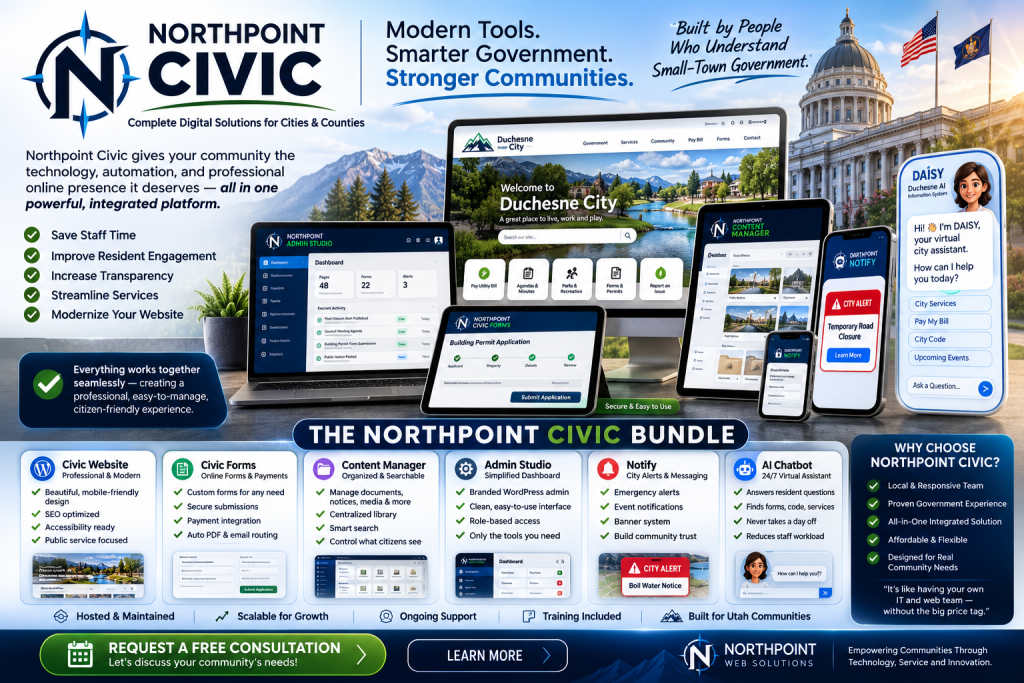
A full rebuild isn’t always necessary. You can often add administrative tools and modern features to an existing WordPress site: a structured content layer for agendas and ordinances, a public service request module, or a simplified admin dashboard for staff. Northpoint’s approach emphasizes modular tools that integrate into WordPress so organizations can add the features they need over time without a complete overhaul.
How to choose a municipal website provider
Ask focused, practical questions during selection:
- Can you show examples of municipal workflows and administrative tools you’ve built?
- How do you handle ongoing maintenance, backups, and security updates?
- Will the site let us keep ownership and move hosting if we need to?
- What training and documentation do you provide for nontechnical staff?
If you’re comparing enterprise platforms to smaller providers, look beyond feature lists and examine how the provider supports staff-level tasks. For a discussion about alternatives, see this overview of affordable options for small cities.
Preparing content and managing updates with limited staff
Start with a content inventory: list the pages you use most and identify stale content. Prioritize pages that support resident tasks. Use templates for recurring items like meeting agendas and press releases so staff can fill a form and publish a consistent page quickly. Scheduling small, regular content-review sessions prevents information from drifting out of date.
Closing thoughts
I still remember the first time I set up a bulletin-board system and realized people would use it while I slept. Municipal websites should do the same: accept requests, share information, and keep operations moving even when staff aren’t at a desk. If your current site is hard to manage or you’d like to add service-request workflows, simpler dashboards, or structured content tools, there are practical steps you can take without a full rebuild.
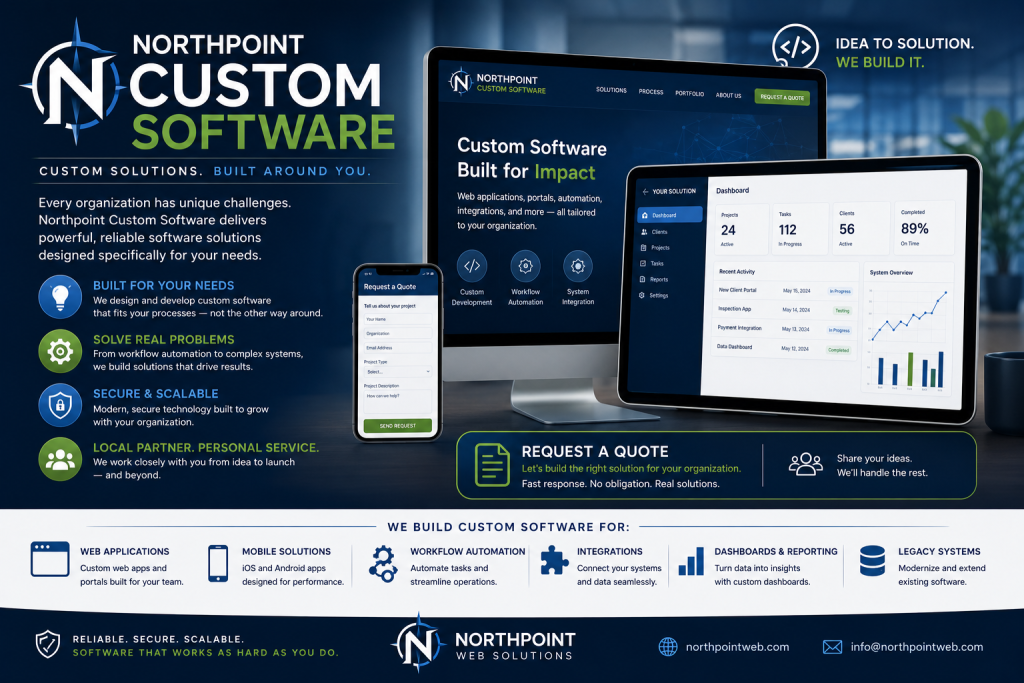
Tell us what is difficult about managing your current website, and we can help identify a practical next step. Request a Northpoint website review to discuss design, maintenance, hosting, accessibility, content, or administrative needs. Whether you need a single tool or a broader municipal solution, we can talk about options that fit your staff and budget.
Northpoint Service Center supports public request submission, tracking, assignment, reporting, and Fluent Forms integration. For simpler staff access and a branded dashboard, see Northpoint Admin Studio. To improve structured content and make updates easier, explore Northpoint Content Manager. If you’d like a perspective on alternatives for small cities, this article may help: Why Small Cities Need More Than a Basic Government Website.