
Tag: uinta basin seo

  • Landing Page Design Best Practices: Maximize Leads 2026

    Landing Page Design Best Practices: Maximize Leads 2026

    Turn Clicks into Contracts and Job Applicants

    Your landing page is your digital storefront, your top recruiter, and your best salesperson, working around the clock. For contractors and industrial businesses in the Uinta Basin, a high-performing landing page isn't a luxury. It's what separates a steady flow of qualified calls in Vernal, Roosevelt, and Duchesne from a page that gets traffic but produces nothing.

    A lot of local companies have the same problem right now. They're paying for ads, sharing jobs on Facebook, sending people to a website, and still not getting enough quote requests or job applicants. Usually the problem isn't the service. It's the page. The message is vague, the phone number is buried, the form asks too much, and the site loads poorly when someone checks it from a truck at a job site.

    Good landing page design best practices aren't about trendy layouts. They're about making it obvious what you do, why you're credible, and what the visitor should do next. That applies whether you're booking excavation work, selling oilfield services, or recruiting CDL drivers who want a better local opportunity.

    If you need a stronger foundation before redesigning a page, review these UX design principles. Then fix the parts that move leads.

    Table of Contents

    1. Craft a Powerful Above the Fold First Impression

    A drilling superintendent in Vernal clicks your ad between calls. A CDL driver in Roosevelt taps your hiring page from a phone in a truck stop. They give you a few seconds. If the top of the page is vague, slow, or generic, they leave.
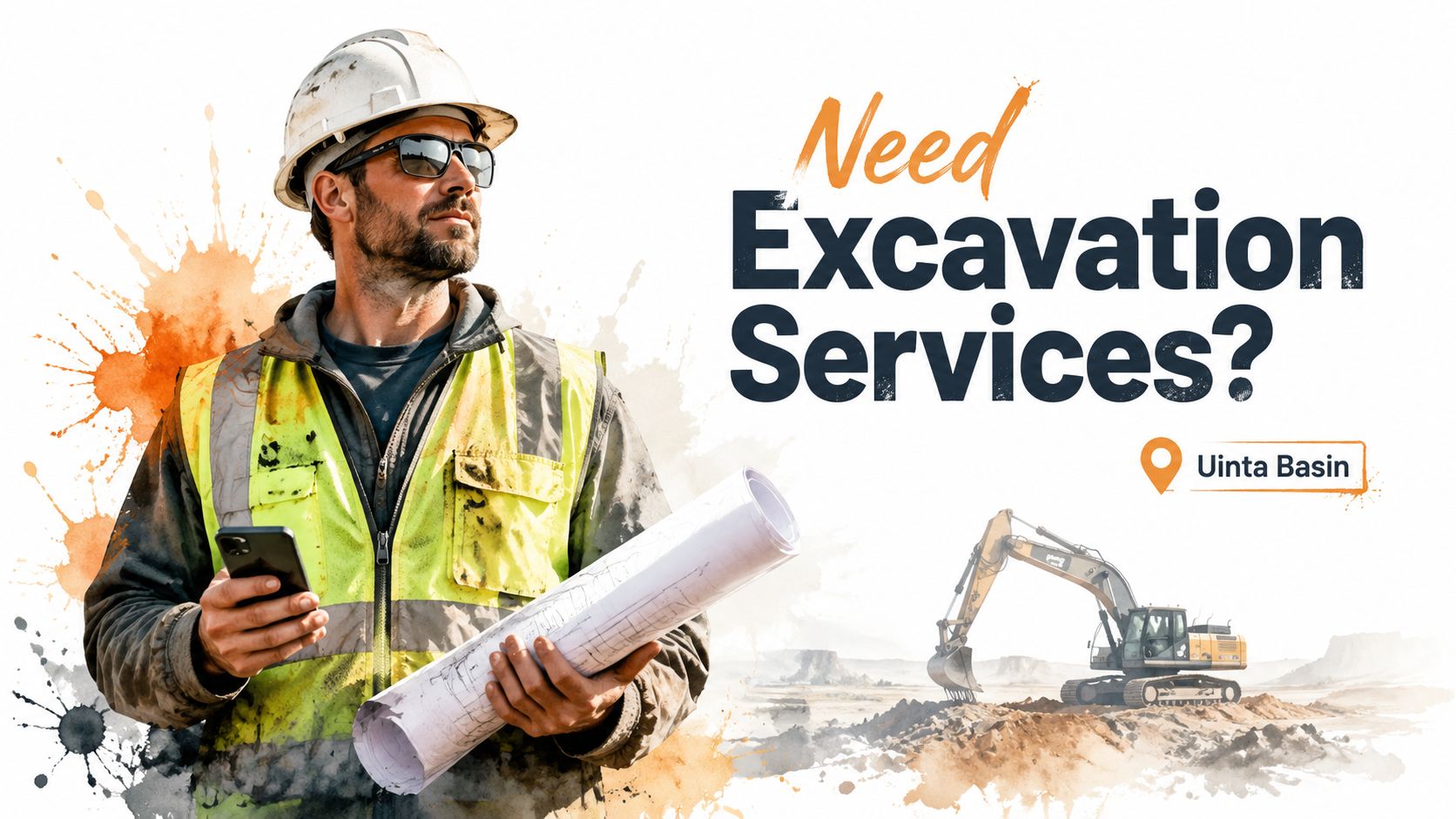
    A construction worker in safety gear holding blueprints and a smartphone with an excavator in the background.

    Your first screen has one job. Tell people exactly what you offer, where you offer it, and why they should trust you enough to keep going. Basin businesses lose leads here by trying to sound polished instead of sounding clear.

    Say What You Do and Where You Do It

    Write the headline like a straight answer to the search or ad click. If someone searched for hydrovac work, say hydrovac work. If you are hiring drivers in Roosevelt, say that. Good examples are “Hydrovac Services in Vernal and Roosevelt” or “Now Hiring CDL Drivers in Roosevelt, Utah.” Weak headlines about quality, innovation, or excellence waste the most valuable space on the page.

    The subheading should do one more thing. Explain the result. Faster excavation. Less oilfield downtime. Steady local driving routes. Better pay and home time. Keep it short and specific.

    Keep the top of the page tight. Remove anything that pulls attention away from the offer. A campaign landing page should feel focused, not like a full website with ten exits.

    Use this test before you publish:

    • Headline clarity: Name the exact service, crew type, or job opening.
    • Service area: Include Uinta Basin, Vernal, Roosevelt, Duchesne, or the actual coverage area.
    • Offer match: Make sure the image and headline match the ad or search term.
    • Visible action: Put the main button or phone number in view right away.
    • Real-world proof: Show trucks, equipment, crews, yards, or active job sites from your operation.

    One more rule. If the hero section could belong to a contractor in Texas, North Dakota, or anywhere else, it is too generic for the Uinta Basin.

    For industrial buyers and job applicants, clarity wins first. Branding can come later.

    2. Place Strategic Calls to Action

    A drilling superintendent in Vernal clicks your ad from the field. A CDL driver in Roosevelt lands on the same page during a lunch break. If both visitors see the same generic button, you lose one or both.

    Your CTA has one job. Tell the right person exactly what to do next.

    Contractors across the Uinta Basin miss leads here because they treat every visitor the same. That approach fails fast in industrial markets. A company looking for hydrovac support wants a quote or a phone call. A driver looking for work wants a fast application. Separate those paths early, and make the next step obvious.

    Match the CTA to the Visitor Intent

    Put the primary CTA high on the page. Repeat it after a proof section. Show it again near the bottom for visitors who need a little more information before they act. Use the same core wording each time so the page feels consistent and clear.

    Button text should be plain and specific. “Get My Project Estimate” beats “Submit.” “Apply for CDL Position” beats “Learn More.” “Call Now for Emergency Service” beats almost everything when the job is urgent and the customer is standing on a muddy site with a problem that needs fixed today.

    Message match matters. If someone clicked an excavation ad, the CTA should point to an excavation estimate or a direct call with your team. If they came from a recruiting campaign, send them to an application or recruiter contact. Do not dump both audiences into the same form and hope they sort it out.

    Here's a practical setup for Basin businesses:

    • Emergency or outage work: “Call Now for Emergency Service”
    • Planned industrial or contractor work: “Get My Project Estimate”
    • Oilfield and field service inquiries: “Request a Jobsite Quote”
    • CDL recruiting page: “Apply for CDL Position”
    • Hiring page for hesitant applicants: “Talk to a Recruiter”
    • Mobile traffic: Use a large tap-to-call button fixed near the top or bottom of the screen

    Placement matters, but hierarchy matters more.

    If you want more than one CTA, rank them hard. One primary action. One secondary action. Everything else competes for attention and lowers response. For a trucking company, that usually means “Apply for CDL Position” is primary on hiring pages, while “Request a Freight Quote” stays secondary or moves to a separate page entirely.

    Keep the design consistent too. Your main CTA should use one color, one style, and one message pattern across the page. If every section has a different button label, visitors slow down and start thinking instead of acting. On a good landing page, the next step feels obvious from the first screen to the last.

    3. Build Unshakeable Trust with Local Social Proof

    A Vernal operations manager lands on your page after searching for an excavation contractor. He is not looking for slogans. He is checking for signs that your crew is safe, reliable, local, and proven on jobs like his.
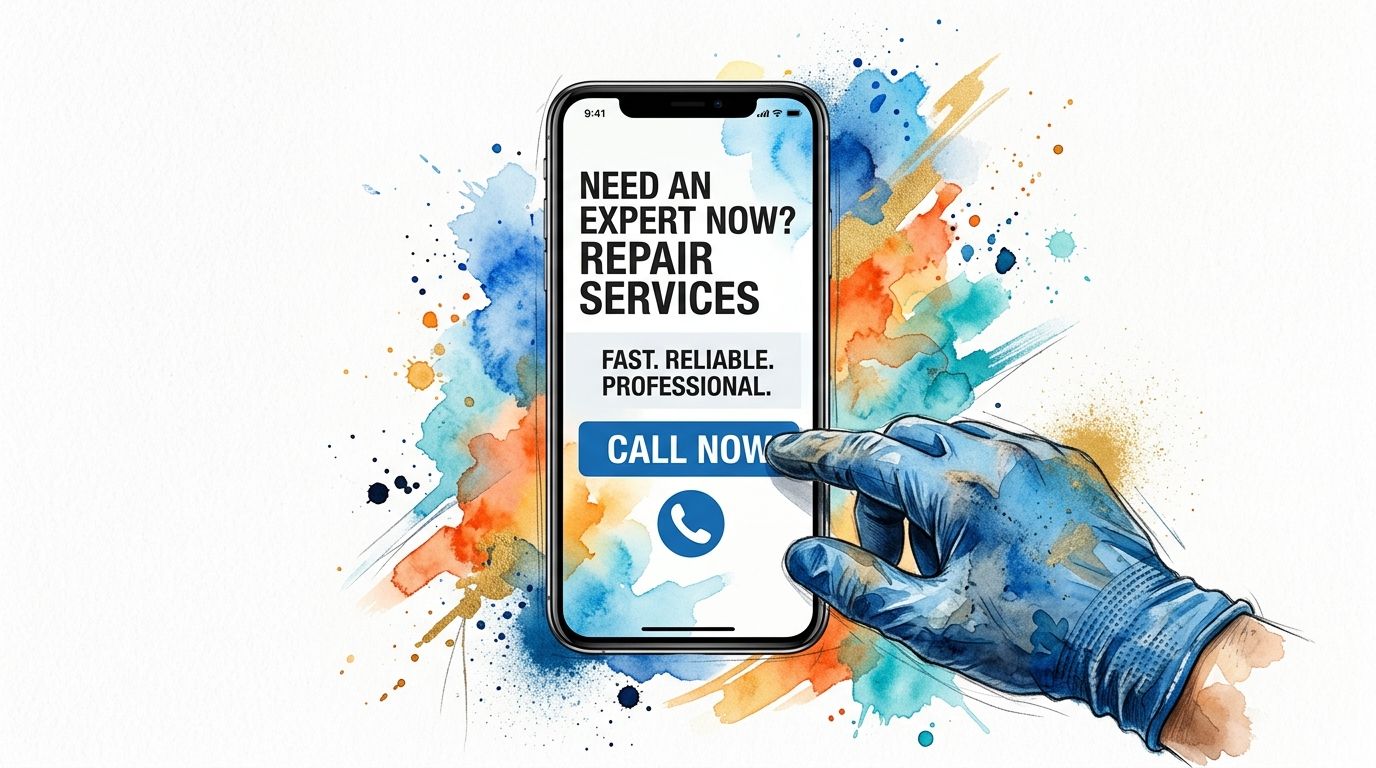
    A gloved hand touching a smartphone screen featuring a professional repair services call-to-action button.

    That decision happens fast in the Uinta Basin. People talk. They know which contractor returns calls, which company shows up ready, and which outfit creates headaches on site. Your landing page should reflect that local reputation with proof a buyer or job applicant can verify in seconds.

    Put trust signals near the top of the page, not buried at the bottom. A short review snippet, a certification badge, a recognizable client logo, or a line that says "Licensed & Insured in Utah" gives visitors a reason to keep reading. For oilfield services, welding, trucking, excavation, and industrial maintenance, that proof carries more weight than another claim about quality.

    Use proof that feels local and specific:

    • Show real credentials: Put licenses, insurance status, safety certifications, and years serving the Basin where people can see them quickly.
    • Use recognizable names carefully: If you have permission, add logos from regional contractors, energy companies, municipalities, or suppliers.
    • Feature detailed testimonials: A strong review mentions the work itself. Emergency line repair, pad prep completed on schedule, clean MSHA or OSHA practices, or fast response during a shutdown.
    • Add employee proof on hiring pages: CDL drivers, equipment operators, and field techs trust current crew members more than polished recruiting copy.
    • Include location context: Reviews from Roosevelt, Vernal, Duchesne, or surrounding communities feel more believable than generic praise with no place attached.

    A testimonial that says "great service" does almost nothing. A testimonial that says your crew mobilized quickly, communicated clearly, and finished a pipeline support job without slowing the rest of the site does the job.

    The same rule applies to recruiting. If you need CDL drivers or field hands, include short quotes about hours, equipment condition, safety expectations, and how the company treats people. That kind of proof answers the questions applicants have. If your team needs help tightening that messaging, review these website copywriting best practices for service pages.

    One more rule. Keep every trust signal honest. Do not post stock testimonials, outdated certifications, or logos from companies that never approved their use. In a small regional market, that mistake spreads fast and costs you far more than one lead.

    Specific credibility wins in the Basin. Generic praise gets ignored.

    4. Write Benefit Focused Copy That Speaks to Your Customer

    A Vernal plant manager lands on your page during a shutdown. A Roosevelt contractor needs a crew that can show up, do the work right, and stop slowing the schedule. A CDL driver in Duchesne is deciding whether your company is worth a call. None of them care about vague claims or polished slogans. They want proof that you solve the problem in front of them.
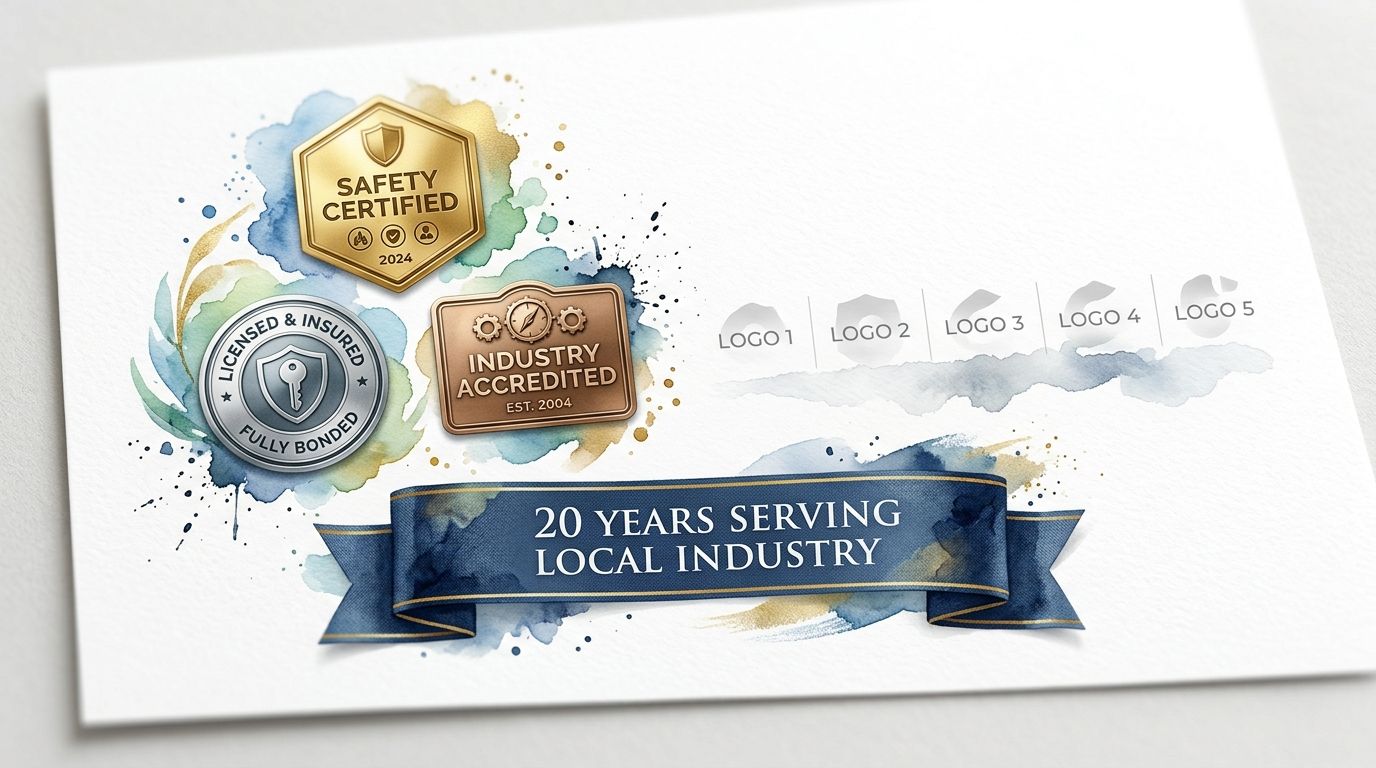
    A professional business banner with certification badges, watercolor accents, and a ribbon stating 20 years serving industry.

    Write copy that answers the buyer's first question. Can you help me get the result I need without wasting my time?

    That means benefits first, details second. “24/7 response” is a feature. “Get a crew on site fast to cut downtime and keep the job moving” is the benefit. “Modern fleet” is a feature. “Reduce delays with equipment that is ready to work in Basin conditions” is the benefit. Industrial buyers and applicants both scan for outcomes before they read the rest.

    Recruiting pages need the same treatment. “Competitive pay” is weak and forgettable. “Steady work, dependable equipment, clear expectations, and pay that respects your experience” gives a CDL driver or operator a reason to keep reading. Say what the job gives them, not what the company wants to announce.

    Use a simple structure on every service or hiring page:

    • Start with the problem they are trying to fix: shutdown support, pad prep delays, pipeline repair, driver turnover, hard-to-fill field roles
    • State the result clearly: faster response, fewer delays, safer work, better communication, steadier employment
    • Back it up with specifics: service area, crew capabilities, equipment, certifications, turnaround times, or types of work you handle in the Uinta Basin
    • Use plain language: write the way your customers, supervisors, and applicants talk on the phone

    Good copy earns trust by being specific. If you serve oilfield sites, say that. If you handle excavation, trucking, roustabout work, welding, or emergency callouts across Vernal, Roosevelt, and Duchesne, put it on the page. Generic language makes serious companies look interchangeable.

    If your message still sounds broad or self-congratulatory, tighten it up with these website copywriting tips for service businesses.

    Keep the writing lean, but do not strip out the substance. Industrial buyers usually need more detail than retail customers because their decisions involve greater risk. Good page copy matches the decision, the risk, and the local market you serve.

    5. Leverage Authentic Industry Specific Visuals

    A field superintendent in the Uinta Basin can spot a fake photo in seconds. So can a CDL driver looking at your jobs page after a 12-hour shift. If your page shows polished stock images instead of your actual trucks, crews, iron, and work sites, you look generic. Generic does not win industrial work.

    Use photos that prove you belong in this market. Show your excavation crew on a real pad prep job near Vernal. Show your welding team in the shop and in the field. Show the trucks, trailers, and equipment you send out across Duchesne, Roosevelt, and the surrounding Basin. If you are hiring, show the cab, the yard, the shop, and the conditions applicants will walk into on day one.

    Show the Work You Actually Do

    Your visuals should answer the questions buyers and applicants already have. Do you have the equipment? Do you run a clean operation? Do your crews look experienced and safety-conscious? Do you really handle the type of work you claim?

    That means close-up equipment shots, active jobsite photos, finished project images, shop capacity, and team photos taken in their actual environment. A trenching contractor should show trenching. An oilfield service company should show field work. A trucking company should show fleet condition and the kinds of loads it moves.

    Keep the files light. Rural connectivity is still inconsistent across parts of the Basin, and oversized images slow the page down for people checking your site from the field. A huge background video in the first screen is a mistake. Use fast-loading images instead, and make any video optional.

    Use visuals with discipline:

    • Use real photography: Book a local photographer for a half day and build a library you can use across service pages and hiring pages.
    • Show relevant scenes: Match the photo to the service, trade, or role on that page.
    • Compress every image: Resize and optimize files before upload so pages load quickly.
    • Skip autoplay video: Put video lower on the page and let visitors choose to play it.
    • Write specific alt text: Describe the crew, equipment, service, and location clearly.
    • Show professionalism: PPE, organized yards, maintained equipment, and clean shops all support trust.

    Good visuals are proof. They show Basin customers and job applicants that you do real work, with real people, in the places you say you serve.

    This is one of the easiest ways to improve a page and separate your company from lookalike competitors.

    6. Design for Mobile First Job Site Accessibility

    A superintendent in Naples needs a trenching contractor. A CDL driver in Roosevelt is checking job posts from his phone between runs. An oilfield service manager is looking up your number from a lease road with weak signal. If your landing page fights them on mobile, you lose the call.

    Mobile-first design means the page works fast, reads clearly, and gives people one obvious next step on a phone. It is not a desktop layout squeezed onto a smaller screen. It is a field-ready page built for thumbs, glare, bad reception, and short attention spans.

    That matters in the Uinta Basin more than it does in a city market.

    Across Vernal, Roosevelt, Duchesne, and the outlying job sites, many visitors are checking your page from a truck cab or a piece of equipment, not from an office with strong Wi-Fi. Your mobile layout has to do the heavy lifting. If you want more leads, use the same mobile usability principles that improve landing page conversion rates in practice: how to improve conversion rate.

    Build for Real Job Site Conditions

    Start with tap targets people can successfully hit. Google's Android accessibility guidance recommends touch targets of at least 48 by 48 dp for mobile controls, which is a solid standard for call buttons, apply buttons, and quote buttons on contractor pages.

    Then clean up the layout:

    • Make primary buttons large and obvious: “Call Now,” “Request Estimate,” and “Apply Now” should stand out and be easy to tap with one thumb.
    • Keep paragraphs short: Field users scan. Break copy into clear sections with strong subheads.
    • Use readable text sizes: If someone has to pinch and zoom, the page is already failing.
    • Keep contact options visible: A sticky call button or fixed CTA bar works well on mobile.
    • Strip out heavy extras: Large videos, oversized graphics, and fancy effects slow pages down where connectivity is weak.

    Here is the standard I recommend for Basin contractors. The first screen should load quickly, explain what you do, name the service area, and offer one immediate action. For an excavation company, that might be a tap-to-call button and a short line about site prep, trenching, or utility work. For a recruiting page, it might be pay range, route type, and a fast apply button that works from the cab of a truck.

    A good mobile page removes friction. A bad one asks people to work for basic information.

    If a driver taps your hiring ad outside Myton, he should be able to read the job summary, see the pay or schedule, and contact you in seconds. If a production company needs a roustabout crew fast, they should not have to hunt through tiny menus or wait for half the page to load. Desktop polish still matters, but mobile usability is what gets the lead in this market.

    7. Optimize Forms for Fast Leads and Job Applications

    A CDL driver sees your hiring ad during a break in Roosevelt. An operations manager needs a trenching crew in Vernal before the end of the day. Both are ready to act. Then your form asks for eight fields, a resume, a full address, and a long message box. That lead is gone.

    Forms on Basin landing pages should do one job. Start the conversation fast.

    If you want more quote requests or more job applicants, cut the form down to the minimum your team needs to respond. Do not ask for every detail up front. You can get job history, project specs, insurance requirements, and scheduling details after the person contacts you.

    Ask for Less, Get More Starts

    For service pages, three fields is usually enough. Name, phone, and a short project note work for most excavation, oilfield service, welding, and site prep pages. If email matters more than phone for your process, use that instead. Keep it simple.

    For recruiting pages, speed matters even more. A driver on a phone should be able to apply in under a minute. Start with name, phone, city, and an optional resume upload. Save the full application for the next step.

    That matters in the Uinta Basin because a lot of these visits happen from the field, from the truck, or in areas with weak service. Long forms lose people before your office ever gets the chance to call back.

    A practical setup looks like this:

    • Lead form: Name, phone, brief project note
    • Job form: Name, phone, city, optional resume upload
    • Button text: “Request Estimate,” “Talk to Our Team,” or “Apply Now”
    • Next-step message: Tell them when they will hear from you
    • Urgent work option: Put a tap-to-call number above the form

    One more point. Match the form to the offer. A hydrovac emergency page should push calls first. A recruiting page for CDL drivers should push a fast apply form first. A general contractor estimate page can do either, depending on how your team handles inbound leads.

    If traffic is coming in but the page is not producing calls or applications, check the form before you rewrite the whole page. Shorter forms fix a lot of conversion problems. If you also need to tighten your local search visibility for these service and hiring pages, use this guide to local SEO for contractors. This article on improving conversion rate is also useful after launch.

    The best form is the shortest form that gives your team enough information to respond fast and well.

    8. Integrate Local SEO to Dominate the Uinta Basin

    A strong page still has to be found. Local SEO is what gets your landing page in front of the right searcher when someone types “hydrovac Vernal,” “excavation contractor Duchesne County,” or “CDL jobs near Roosevelt.”

    Many contractors miss easy wins. They build one broad service page and expect it to rank for everything. It won't. Searchers use specific location and service combinations, and your page should reflect that clearly in the title, heading, copy, and supporting content.

    Build Separate Pages for Separate Searches

    Create landing pages around actual offers. If you run multiple services, separate them. Hydrovac work should have its own page. Roustabout services should have their own page. Hiring pages should be separate from service pages. A person looking for a job and a person looking for a contractor aren't the same visitor.

    Keep the page locally grounded. Mention the actual service area, nearby towns, job types, and regional context. For industrial audiences, enough technical detail also matters for trust. Verified data shows that B2B decision-makers in industrial sectors often leave pages that feel too thin or generic, which is why local relevance and useful detail have to work together.

    Use this local SEO foundation:

    • Title tags: Lead with the service and location.
    • Headlines: Match the search intent directly.
    • Body copy: Mention realistic project types and local service areas naturally.
    • Internal support: Link from related service pages and blog content.
    • Business consistency: Keep your company name, address, and phone consistent across the web.

    If you need a deeper local strategy, this guide to local SEO for contractors is the right starting point.

    A page that ranks but doesn't convert is wasted traffic. A page that converts but never gets found is wasted effort. You need both.

    8-Point Landing Page Best Practices Comparison

    Use this table to decide what to fix first. If you run an excavation company in Roosevelt, an oilfield service crew in Vernal, or you are hiring CDL drivers across the Basin, start with the items that improve clarity, trust, and response speed fastest.

    Item Implementation Complexity 🔄 Resource Requirements ⚡ Expected Outcomes ⭐ Ideal Use Cases 💡 Key Advantages 📊
    Craft a Powerful "Above the Fold" First Impression Medium, copy + design, needs testing 🔄 Low to Medium, headline writer, hero image, designer ⚡ High, lower bounce, better early qualification ⭐ Local landing pages, recruiting, emergency service pages 💡 Immediate clarity, stronger engagement, better message match 📊
    Place Strategic Calls-to-Action (CTAs) Low to Medium, placement + testing 🔄 Low, design + basic CRO tools ⚡ High, more calls, form fills, and quote requests ⭐ Conversion-focused pages, multi-intent landing pages 💡 Directs user action, cuts hesitation 📊
    Build Unshakeable Trust with Local Social Proof Medium to High, collect, verify, embed testimonials 🔄 Medium, time, photo or video work, reputation tools ⚡ Very High, less hesitation, supports premium pricing ⭐ High-stakes industries (oilfield, construction, transportation) 💡 Strong local credibility, higher trust, more pricing power 📊
    Write Benefit-Focused Copy That Speaks to Your Customer Medium, customer research and rewrite 🔄 Low to Medium, copywriter, stakeholder interviews ⚡ High, better conversions, clearer ROI messaging ⭐ B2B industrial sales, service pages needing ROI proof 💡 Clearer value, stronger differentiation, better buyer fit 📊
    Use Authentic, Industry-Specific Visuals Medium, photo shoots + optimization 🔄 Medium to High, photographer or videographer, editing, hosting ⚡ High, longer time on page, stronger trust ⭐ Construction, welding, excavation, trucking 💡 Shows real capability, puts faces to the business, increases engagement 📊
    Design for Mobile-First, Job Site Accessibility High, disciplined design and cross-device testing 🔄 Medium, dev time, testing tools, performance work ⚡ Very High, better rankings and more mobile conversions ⭐ Job-site audiences, mobile-heavy users, rural connections 💡 Faster loads, easier use in the field, higher mobile conversion rates 📊
    Optimize Forms for Fast Leads and Job Applications Low, simplify fields and UX 🔄 Low, form setup + CRM integration ⚡ High, fewer drop-offs, faster lead capture ⭐ Lead-gen pages, quick-apply recruiting forms 💡 Higher conversion rates, quicker follow-up, less friction 📊
    Integrate Local SEO to Dominate the Uinta Basin Medium to High, on-page SEO, schema, content strategy 🔄 Medium to High, ongoing content, citations, specialist time ⚡ High, long-term, sustained organic traffic from high-intent searches ⭐ Local service businesses seeking steady leads 💡 Lower long-term cost per lead, better discoverability, stronger map visibility 📊

    Your Landing Page Checklist for Uinta Basin Success

    Building a strong landing page isn't about flashy design trends. It's about removing confusion, reducing friction, and making trust obvious from the first screen. If you own an excavation company, oilfield service business, trucking company, welding shop, or another contractor operation in the Uinta Basin, your page needs to work for the way local people search, browse, and make decisions.

    The standard homepage approach usually isn't enough. A landing page should match one offer to one audience with one clear next step. If you're recruiting CDL drivers, build the page around the job. If you're selling emergency field service, build the page around fast response. If you're trying to win excavation work, focus the message on reliability, equipment capability, service area, and proof that you've done this kind of work before.

    The basics still matter most. Lead with a clear headline. Put the contact action where people can see it. Show local trust markers early. Use real photos, not filler images. Keep forms short. Make the page easy to use on a phone in the field. And if your audience is industrial or B2B, don't strip out so much detail that the page feels shallow. Serious buyers need enough information to believe you know what you're doing.

    Here's the simple gut check.

    • Headline: Does it clearly say what you do and who you serve locally?
    • CTA: Is the main action obvious, direct, and repeated in the right places?
    • Trust: Can visitors see proof fast, including licensing, reviews, logos, or employee credibility?
    • Mobile: Is the page easy to read, tap, and use on a job site?
    • Copy: Does the writing focus on the customer's problem and outcome instead of your company talking about itself?
    • Form: Did you ask only for the information needed to start the conversation?
    • SEO: Is the page built around a real service plus a real location people search for?

    If your current pages aren't bringing in enough leads or applicants, don't assume you need more traffic. Often you need a better page. Better messaging, better structure, better trust signals, and better usability usually make the biggest difference.

    Northpoint Web builds lead-generation and recruiting websites for contractors and industrial businesses in the Uinta Basin. If you want landing pages that help you win more jobs, attract better applicants, and compete harder online, a focused strategy call is the fastest place to start.


    Northpoint Web helps contractors, oilfield service companies, trucking businesses, and local companies across the Uinta Basin build landing pages that generate real leads and real applicants. If your website isn't pulling its weight, talk with Northpoint Web and get a practical plan built for your business, your market, and the way people find you in rural Utah.

  • SEO for Construction: Win More Bids in 2026

    SEO for Construction: Win More Bids in 2026

    If you're running a construction company in Roosevelt, Vernal, or anywhere across the Uinta Basin, you've probably felt the shift already. Referrals still matter, but they aren't carrying the whole load anymore. A property owner hears your name, then Googles you. A company needs excavation, welding, trucking, or site work, then compares three contractors on a phone before making a call. A potential CDL driver or equipment operator checks your reputation online before filling out an application.

    That's why SEO for construction matters now. WebFX reports 1.7 million online searches per month for independent contractors in its construction statistics roundup, which tells you the market is already searching online at scale, not just asking around at the coffee shop or job trailer (construction search demand data from WebFX). For a contractor in a regional market, that changes the game. Your website, your Google Business Profile, your reviews, and your service pages all become part of how you win bids and attract workers.

    The bigger opportunity is resilience. Good SEO for construction doesn't just help you get found for one service this month. It builds a system that supports better project inquiries, stronger credibility, and more qualified job applicants, even while Google keeps changing the search results.

    Table of Contents

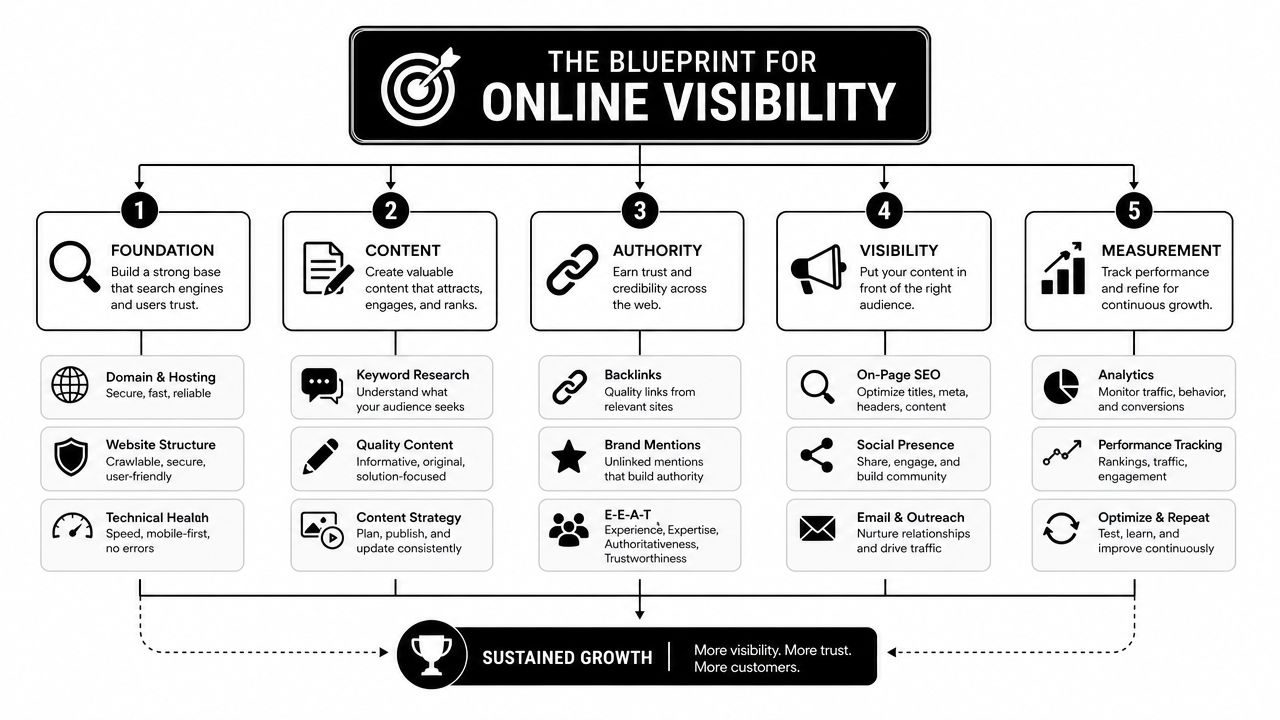
    The Blueprint for Online Visibility

    Construction companies get in trouble online the same way they get in trouble in the field. They start building before the plan is clear. A homepage goes up, a few service blurbs get added, maybe a contact page and some photos, and then everyone wonders why the site isn't bringing in useful leads.

    Good SEO for construction starts before design. It starts with figuring out what buyers and job seekers are typing into Google.

    Start with search intent, not website design

    A contractor in Roosevelt shouldn't begin with a generic phrase like "construction services." That's too broad, too vague, and usually disconnected from how real people search. A better starting point is the kind of phrase tied to actual buying intent, like excavation in a specific town, welding for a specific industry, or trucking tied to a local service area.

    In practical terms, you're looking for the intersection of service + location + intent. That means phrases such as excavation contractor Roosevelt UT, welding and fabrication Vernal UT, CDL driver jobs Uinta Basin, or oilfield trucking company Duchesne County. Those searches reveal what kind of page you need to build.

    Practical rule: If one page tries to rank for everything, it usually ranks for nothing important.

    Many contractor websites often break down because of this. They have one "Services" page carrying excavation, site prep, trenching, demolition, trucking, reclamation, and hiring. That's like trying to pour footings, frame walls, and finish electrical from one set of instructions.

    A diagram illustrating the five key steps for online visibility, including foundation, content, authority, visibility, and measurement.

    Build a site structure that matches real demand

    A strong contractor site works like a blueprint. Each room has a purpose. Each page should do one clear job.

    One practical workflow from Padula Media is to map one core keyword to one dedicated page, then build long-tail and location variants around it. That reduces keyword cannibalization and helps each page match a single search intent (construction page mapping workflow from Padula Media).

    Here's what that often looks like:

    Page type Purpose Example
    Service page Capture high-intent local searches Excavation Contractor in Roosevelt, UT
    Location page Support nearby markets Excavation Services in Vernal
    Project page Show proof Pipeline trenching project in Duchesne County
    Careers page Recruit workers CDL Driver Jobs in the Uinta Basin
    About or trust page Reduce friction Safety, equipment, service area, certifications

    That structure helps both Google and your visitors. The search engine understands relevance. The visitor understands where to click next.

    If you're thinking beyond search alone, it also helps to connect web visibility with digital and offline lead strategies. Contractors don't win work from one channel in isolation. SEO works best when your website, trucks, referrals, sales follow-up, and local visibility all point in the same direction.

    Keep every page on one job

    Once the structure is clear, the build becomes simpler.

    Use descriptive URLs. Keep a clean heading hierarchy. Make sure important pages are only a few clicks from the homepage. Submit an XML sitemap through Google Search Console and Bing Webmaster Tools. Those are basic site-structure tasks, but they matter because they help search engines discover and understand the pages you've invested in.

    A simple planning checklist works well here:

    • Pick one core term per page: Don't make your excavation page fight your sitework page.
    • Add local variants naturally: Mention Roosevelt, Vernal, Duchesne, or the Uinta Basin where relevant.
    • Support the page internally: Link from the homepage, related services, project pages, and careers pages.
    • Match the visitor's next step: Bid request, call button, equipment inquiry, or job application.

    The companies that usually struggle with SEO for construction aren't lacking effort. They're lacking a blueprint. Once the site structure matches how people search, the rest of the work starts compounding instead of competing with itself.

    Dominate Your Service Area with Local SEO

    For most contractors, local SEO is the closest thing to low-hanging fruit. Not easy, but direct. When someone searches for a contractor with a local need, Google often shows the map, the business profiles, the review signals, and the nearest relevant providers before anything else gets attention.

    That's why your Google Business Profile deserves more respect than most companies give it. It isn't just a listing. It's your digital front door.

    Treat your Google Business Profile like a field office

    A weak profile usually looks familiar. Bare description. Few photos. No updates. Services listed loosely, if at all. Maybe a handful of old reviews. That kind of profile tells Google very little and tells a prospect even less.

    A strong profile does the opposite. It describes what you do, where you do it, and why someone should trust you enough to call. Modern construction SEO guidance puts Google Business Profile optimization, reviews, local citations, mobile usability, page speed, backlinks, and project-specific content at the center of the strategy, not on the sidelines (construction SEO evolution and timing guidance from Get Found Fast).

    One useful detail from that same source is timing. It says low-competition construction keywords may move in 24 hours to a few days, while more competitive terms can take 30 to 90 days, and highly competitive terms 90 to 180 days to show meaningful movement. That's one reason local SEO often produces the first visible traction for contractors.

    Your profile should answer the same questions a customer would ask at the counter. What do you do, where do you work, and how do I contact you right now?

    What a strong local profile looks like

    Take a hypothetical company called Uinta Basin Welding. A high-functioning profile would include:

    • Accurate business category: Welding contractor, metal fabricator, or the closest fit to actual work performed.
    • Service-focused description: Mention field welding, shop fabrication, repair work, structural steel, mobile service, or industrial support if those are the offerings.
    • Actual project photos: Trucks, welds, crews, equipment, shop images, and finished work.
    • Defined service areas: Roosevelt, Vernal, Duchesne, and nearby communities if that reflects operations.
    • Clear contact paths: Phone, website, hours, and service information that matches the website.

    Then add regular Google Posts. Most contractors ignore them. That's a mistake. Posts can highlight a completed project, announce a new piece of equipment, share a hiring notice, or answer a common service question. They show activity, and activity helps.

    For businesses trying to sharpen this part of their visibility, Northpoint Web publishes local search content under its local SEO tag that covers many of the same practical issues contractors run into in smaller regional markets.

    Reviews and posts move the job forward

    Reviews aren't just for optics. They affect click behavior because they reduce uncertainty. A property owner wants evidence that you finish work well. A commercial buyer wants signs that you're responsive and legitimate. A potential employee wants to know if the company looks stable.

    A basic review system is enough to outperform most competitors:

    1. Ask at the right moment: Right after successful completion, not months later.
    2. Make it easy: Send the direct review link by text or email.
    3. Guide the feedback naturally: Ask clients to mention the service and location in their own words if they're comfortable.
    4. Respond to every review: Short, professional, and specific.

    Local SEO also rewards consistency. Your business name, address, phone number, service area details, and core services should align across your website, directories, and profile. When that information drifts, Google gets mixed signals.

    For a contractor in the Uinta Basin, local SEO isn't abstract. It's the difference between showing up when someone searches for a crew nearby and getting passed over for a competitor with a cleaner profile and stronger review trail.

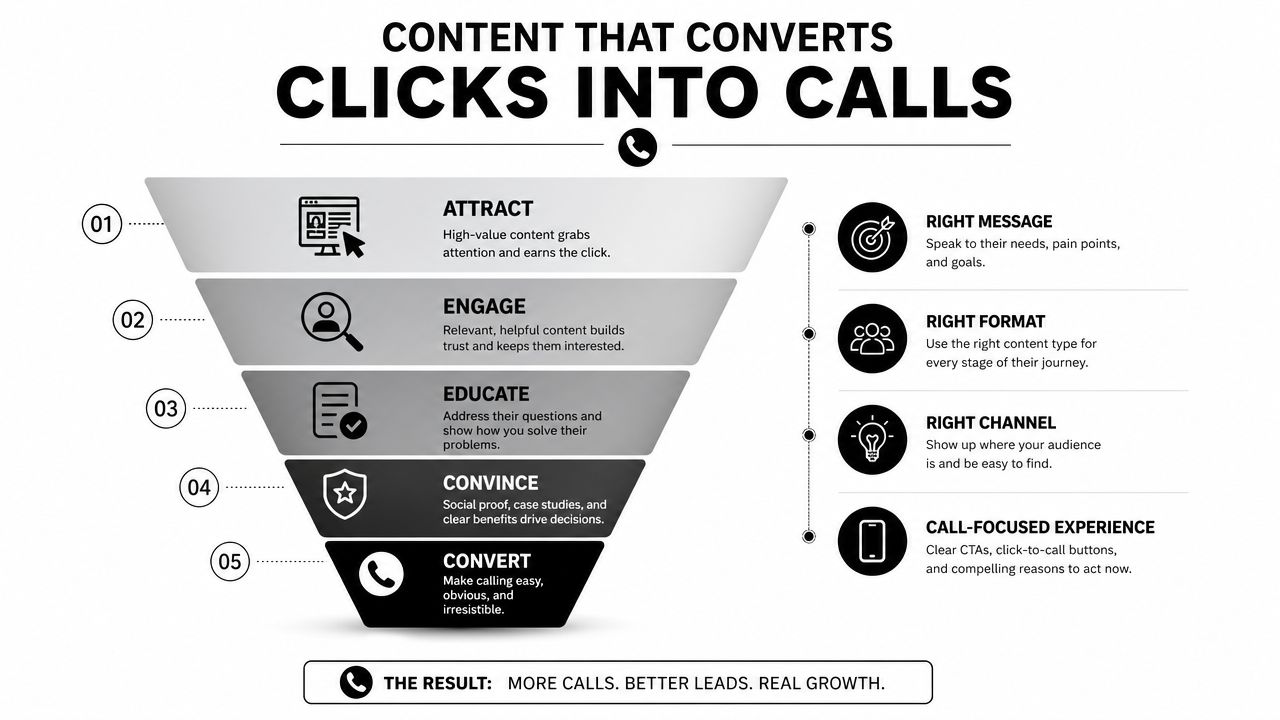
    Content That Converts Clicks into Calls

    A lot of contractor websites have traffic problems, but many have conversion problems disguised as traffic problems. The page gets a visit. Nothing happens. No call, no quote request, no application. That usually isn't because the visitor had no interest. It's because the page gave them too little to act on.

    The before-and-after difference is easy to spot.

    The difference between a weak page and a useful one

    Before: a generic service page titled "Services." It lists excavation, trucking, welding, and site prep in one short block of text. No service area detail. No project examples. No explanation of equipment, process, or job types. The only call to action says "Contact us."

    After: a dedicated page for excavation in Roosevelt, UT. It explains what kinds of excavation jobs the company handles, the equipment involved, what project sizes fit well, what areas are served, and what the next step looks like for getting a bid. It includes photos of actual work and a clear contact path.

    That second page works because it answers practical questions buyers ask before they call:

    • Can this company handle my kind of job
    • Do they work in my area
    • Do they look established and capable
    • What should I do next

    A marketing funnel infographic illustrating steps to convert online clicks into sales calls for business growth.

    A useful service page usually includes a few core elements:

    Element Weak version Strong version
    Page focus All services on one page One service, one intent
    Trust signal Stock language Real project photos and specifics
    Local relevance Broad service area mention Towns, counties, or region served
    Conversion path Generic contact form Quote request, call button, or scope discussion

    Project pages do more than show photos

    Many contractors have project photos sitting on phones, in text threads, or in a Facebook album. That's wasted proof. Those photos can become project pages that help close work.

    A solid project page doesn't need to reveal confidential details. It just needs enough information to demonstrate capability. State the type of work, the location or region if appropriate, the scope, the equipment used, any constraints you solved, and what kind of client the project served. That gives both Google and the visitor useful context.

    If your service page is the promise, your project page is the evidence.

    This matters more than most owners realize. Search visibility gets you in the conversation. Proof helps you survive the comparison.

    Use content to recruit, not just to sell

    This is the part many construction companies miss. They build pages for customers and ignore pages for workers, even though labor is often the tighter bottleneck.

    A major underserved angle in SEO for construction is recruiting SEO, not just lead generation. One industry source notes that construction job openings remain high relative to employment in the U.S., which makes recruiting-focused search content a practical strategy for contractors trying to hire CDL drivers, equipment operators, welders, laborers, and skilled tradespeople (recruiting SEO perspective from Construction News and Report).

    The weak version of a careers page says, "We're hiring. Apply now."

    The stronger version builds a hiring funnel:

    • Role-specific pages: CDL Driver Jobs Vernal UT, Heavy Equipment Operator Jobs Roosevelt UT, Welding Jobs Uinta Basin
    • Culture and expectations pages: What the work is like, typical schedules, equipment, standards, and who fits well
    • Benefits and pay information: Be as clear as you're comfortable being
    • Application flow: Short, mobile-friendly, and fast

    That last point matters. If your phone lines get missed after hours or during busy periods, search traffic can leak out before anyone on your team gets back to the lead. For companies trying to tighten that gap, a service like professional call answering for home services can support the handoff between website inquiry and live conversation.

    The contractors who win online over time usually do two things well. They publish pages that help customers trust them, and they publish pages that help workers picture themselves on the crew. That's how content becomes operational, not just promotional.

    Building Your Digital Reputation and Authority

    A contractor in Roosevelt can have a solid crew, good equipment, and years of real project experience, then still lose work online to a company with a weaker track record but cleaner digital proof. That gap shows up before the first phone call. Owners, property managers, and potential hires check reviews, business listings, project photos, and third-party mentions to decide whether your company looks established or risky.

    Google evaluates those same signals.

    Consistency builds trust

    Start with the basics. Your business name, address, phone number, website, and service area need to match across your Google Business Profile, local directories, trade listings, chamber pages, and supplier profiles. If one site shows an old number, another lists a different company name, and a third sends visitors to the wrong website, people hesitate. Search engines do too.

    This is foundation work.

    A clean citation profile will not impress anyone at the shop. It will prevent avoidable confusion that costs estimates, callbacks, and applications. I have seen contractors spend money driving traffic to a site, then lose leads because an outdated directory still routed calls to a disconnected line.

    If your website needs a more stable base before you start cleaning up authority signals, this guide to a WordPress website for business lays out what that setup should support.

    Relevant links carry real weight

    Link building gets a bad name because plenty of it deserves one. Buying junk links from unrelated websites is the SEO version of pouring a slab on loose soil. It may look finished for a minute, but it does not hold up.

    The links that help a construction company usually come from real business relationships and visible local involvement. Good examples include:

    • Chamber of Commerce and local business association listings
    • Supplier and manufacturer dealer pages
    • Trade association member directories
    • Local news coverage of projects, expansion, awards, or community work
    • Sponsorship pages for rodeos, school programs, youth sports, and scholarship funds
    • Partner mentions from subcontractors, engineers, or equipment vendors

    These links do more than pass authority. They confirm that your company exists in the local business community and has ties that make sense offline. That matters in smaller markets where reputation still travels by word of mouth, even when the first impression happens on a screen.

    A simple test helps. If a link would make sense to show a customer, banker, or project partner, it is probably worth pursuing.

    Reviews shape both trust and operations

    Reviews affect click-through rates, map visibility, and conversion. They also expose patterns inside the business. If several reviews mention missed callbacks, unclear scheduling, or poor site cleanup, that is not just a marketing issue. It is an operations issue showing up in public.

    The companies that handle reviews well usually build a repeatable process:

    1. Ask for feedback after a clear win, such as a completed phase, final walkthrough, or successful service call.
    2. Make it easy for the customer with a direct link or QR code.
    3. Respond to every review in a professional tone.
    4. Share recurring feedback with the office and field team so the same issue does not keep resurfacing.

    Negative reviews are part of the job if you stay in business long enough. The goal is not a perfect profile. The goal is a believable one. A measured response to a complaint often helps more than another five-star review with no detail, because it shows how the company acts when a project hits friction.

    Authority should support sales and hiring

    This section is not only about winning more leads. A strong digital reputation also helps you recruit people who want steady work with a company that looks organized and credible. Skilled operators, welders, foremen, and laborers research employers the same way customers research contractors. They look for signs that the business is active, respected, and likely to keep the schedule full.

    That is why digital authority matters more now than it did a few years ago. Search results change. Map packs shift. AI summaries may answer basic questions before a prospect clicks. Reputation signals still hold their value because they are harder to fake and easier to verify.

    Build those signals like you would build a shop foundation. Get the details straight. Use materials that hold up. Make sure the structure supports the weight you plan to put on it.

    The Technical Tune-Up for a Faster Site

    Technical SEO sounds complicated until you strip it down to business terms. For a contractor, the easiest analogy is heavy equipment maintenance. If a machine starts slow, stalls under load, or has controls that don't work right, the crew loses time and confidence fast.

    Your website works the same way. Three questions matter most. Is it fast? Does it work well on a phone? Is it secure?

    Fast enough to keep the visitor

    A slow site creates friction before your sales message even has a chance. That problem hits harder in rural markets, where people may be checking your site from the field, from a truck, or on a weaker mobile connection.

    Common speed problems include oversized images, cluttered themes, too many unnecessary plugins, and bloated page builders. The fix usually isn't exotic. Compress images, simplify layouts, remove junk, and use solid hosting.

    A professional man optimizing website performance on a laptop, illustrated with page speed analytics and tools.

    A contractor doesn't need to memorize technical jargon to judge performance. Open the site on your own phone. If the page drags, jumps around, or takes too long to become usable, your prospects are feeling that too.

    Mobile usability matters on real job sites

    Most contractor traffic isn't happening from a desktop in a quiet office. It's happening on phones. That means your site has to work for people with one hand free, little patience, and a specific task in mind.

    Check these basics:

    • Tap targets: Can someone hit the phone button without zooming?
    • Readable text: Can they scan the service page quickly on a smaller screen?
    • Short forms: Does the estimate form ask only for what you really need?
    • Sticky contact options: Is the call button visible without hunting for it?

    A lot of small business sites fail here because they were designed visually, not functionally. If you're evaluating platforms or rebuild options, Northpoint Web has a practical overview of what matters in a WordPress website for business, especially for companies that need flexibility, local SEO control, and service-page growth over time.

    Security is basic professionalism

    HTTPS isn't a fancy upgrade anymore. It's table stakes. People notice when a site throws browser warnings or looks outdated. Even if they don't understand the technical details, they understand when something feels off.

    Security also supports trust in quieter ways. Contact forms feel safer. Browsers behave better. The site looks maintained rather than abandoned.

    Here's a quick owner-level audit:

    Check What to look for Business impact
    Speed Pages load cleanly and quickly Fewer drop-offs
    Mobile Buttons, forms, and text work on phones More calls and applications
    Security HTTPS and no browser warnings More trust

    Technical tune-up work rarely gets applause, but it removes friction from every other part of your SEO. If the site is slow, clumsy, or untrustworthy, your local rankings and content quality have to fight uphill just to keep attention.

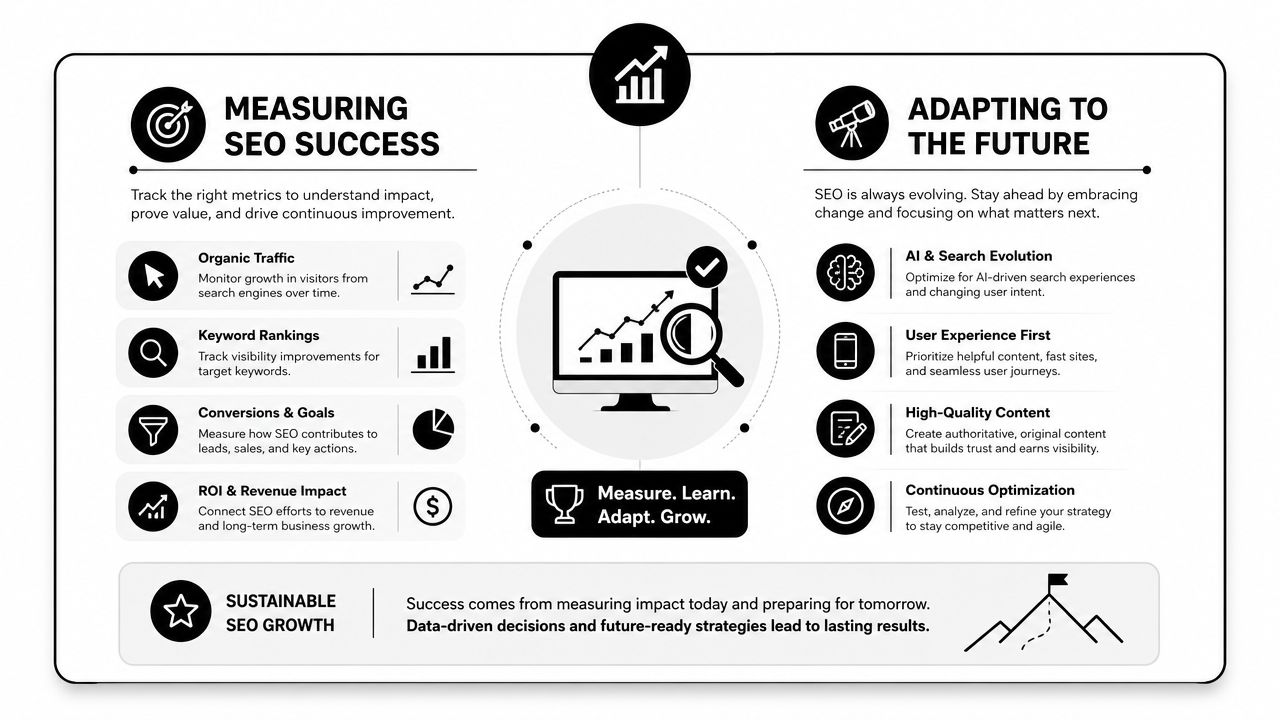
    Measuring SEO Success and Adapting to the Future

    Construction companies don't need prettier reports. They need evidence that SEO is producing business results. Rankings matter, but only as a means to something else. The key question is whether your online presence is helping you win better bids, generate more qualified calls, and bring in stronger applicants.

    That shift in mindset matters even more as search results keep changing.

    Track business outcomes first

    A contractor can sit on decent rankings and still have a weak SEO program. That happens when the site brings in the wrong traffic, sends visitors to thin pages, or makes it hard to convert.

    Start with metrics tied to actual operations:

    • Phone calls from the website
    • Quote request form submissions
    • Career applications
    • Google Business Profile actions
    • Service pages that generate real inquiries

    Those are the numbers your office can tie back to pipeline and hiring. Everything else supports them.

    For owners who need a practical framework for reporting, this guide for proving SEO impact is useful because it focuses on connecting visibility work to measurable business outcomes instead of stopping at vanity metrics.

    Use Search Console like an operator dashboard

    Google recommends using Search Console and analytics to monitor crawl status, indexation, traffic, and conversions, then improving pages that rank in positions 11 to 15 because those pages are often close enough to page-one movement to justify targeted work (Search Console optimization guidance summarized by Moore Tech Solutions).

    That advice is practical for contractors because it tells you where to spend effort next. If a service page is already close, you usually don't need to reinvent the site. You need to strengthen the page.

    Useful actions include:

    1. Improve the title and headings: Make them clearer and more aligned with actual search intent.
    2. Add proof: Project photos, scope details, service area context, and stronger calls to action.
    3. Tighten internal linking: Link from related service pages, project pages, and navigation areas.
    4. Refresh stale content: Update equipment lists, service areas, or process explanations.

    An infographic titled Measuring SEO Success and Adapting to the Future, featuring key performance indicators and growth strategies.

    One of the biggest mistakes in SEO for construction is treating the website like a one-time build. It isn't. Rankings shift, competitors update their pages, reviews come in, service areas expand, and hiring needs change. The companies that stay visible treat SEO more like equipment maintenance or safety management. Ongoing, scheduled, and tied to real-world conditions.

    AI search changes the format, not the need for proof

    Many contractors are asking a fair question now. If Google keeps adding AI Overviews and more zero-click features, does SEO still matter?

    Yes, but the target is changing. One recent construction marketing source notes that AI-generated search experiences are expanding across informational queries, while Google still shows local business profiles and map results for high-intent contractor searches. That makes a mixed strategy more valuable. Local pack visibility for direct service intent, and proof-based FAQ content for citation-style visibility in AI-driven results (AI Overviews and local visibility perspective from Percepture).

    That means your content should become more specific, not more generic.

    Instead of broad pages that say, "We offer quality construction services," publish material that answers concrete questions:

    • What kinds of excavation jobs do you handle
    • What equipment do you run
    • Which towns and counties do you serve
    • What should a customer expect before requesting a bid
    • What does a CDL driver role at your company look like

    AI systems and traditional search engines both respond better to content with clear structure, useful detail, and visible proof. They have less use for filler than ever.

    For contractors who want outside help implementing that process, Northpoint Web offers SEO services for contractors focused on local visibility, service-page development, technical improvements, and recruiting-oriented website strategy.

    The companies that hold up best through search changes are usually not chasing tricks. They are documenting their work clearly, showing evidence, staying active in their market, and measuring what produces actual business value. That's what makes SEO durable.


    If your construction company needs a website and search strategy built for real outcomes, not just rankings, Northpoint Web helps contractors in Roosevelt, Duchesne, Vernal, and across the Uinta Basin improve local visibility, generate bid opportunities, and attract qualified job applicants with practical SEO and high-performance websites.